


How Pathoconnect Transformed Diagnostic Operations with AI-Powered Agents
Introduction: The Growing Need for Intelligent Automation in Diagnostics
Diagnostic operations involve multiple moving parts — order booking, phlebotomist coordination, sample collection, report generation, insurance communication, and financial reconciliation. As diagnostic networks scale, manual coordination across these workflows leads to delays, inefficiencies, and increased operational costs.
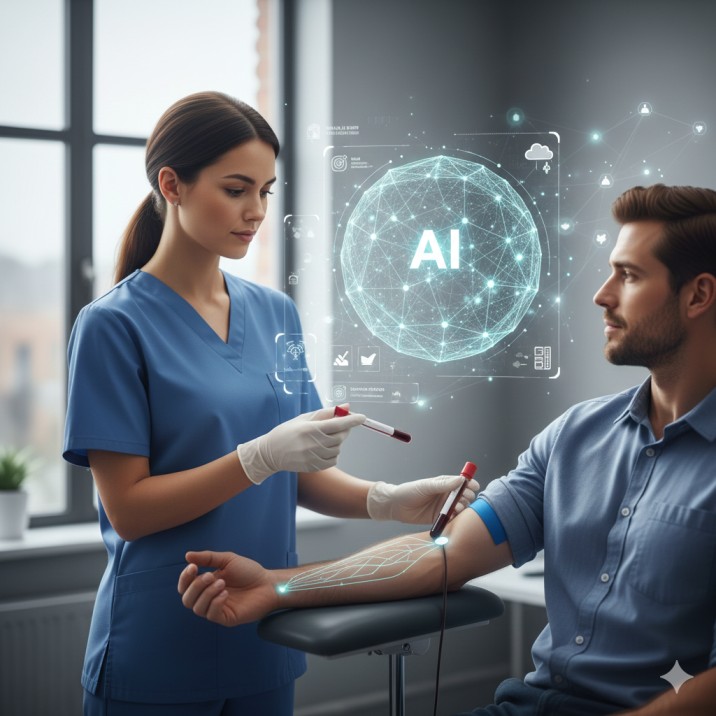
Pathoconnect addressed these challenges by implementing AI-powered agents with chatbot and decision-making capabilities, embedded directly into its diagnostic operations platform. This case study explains how Pathoconnect successfully leveraged AI agents to automate workflows, enhance operational efficiency, and deliver a superior experience to patients, labs, and partners.
About Pathoconnect
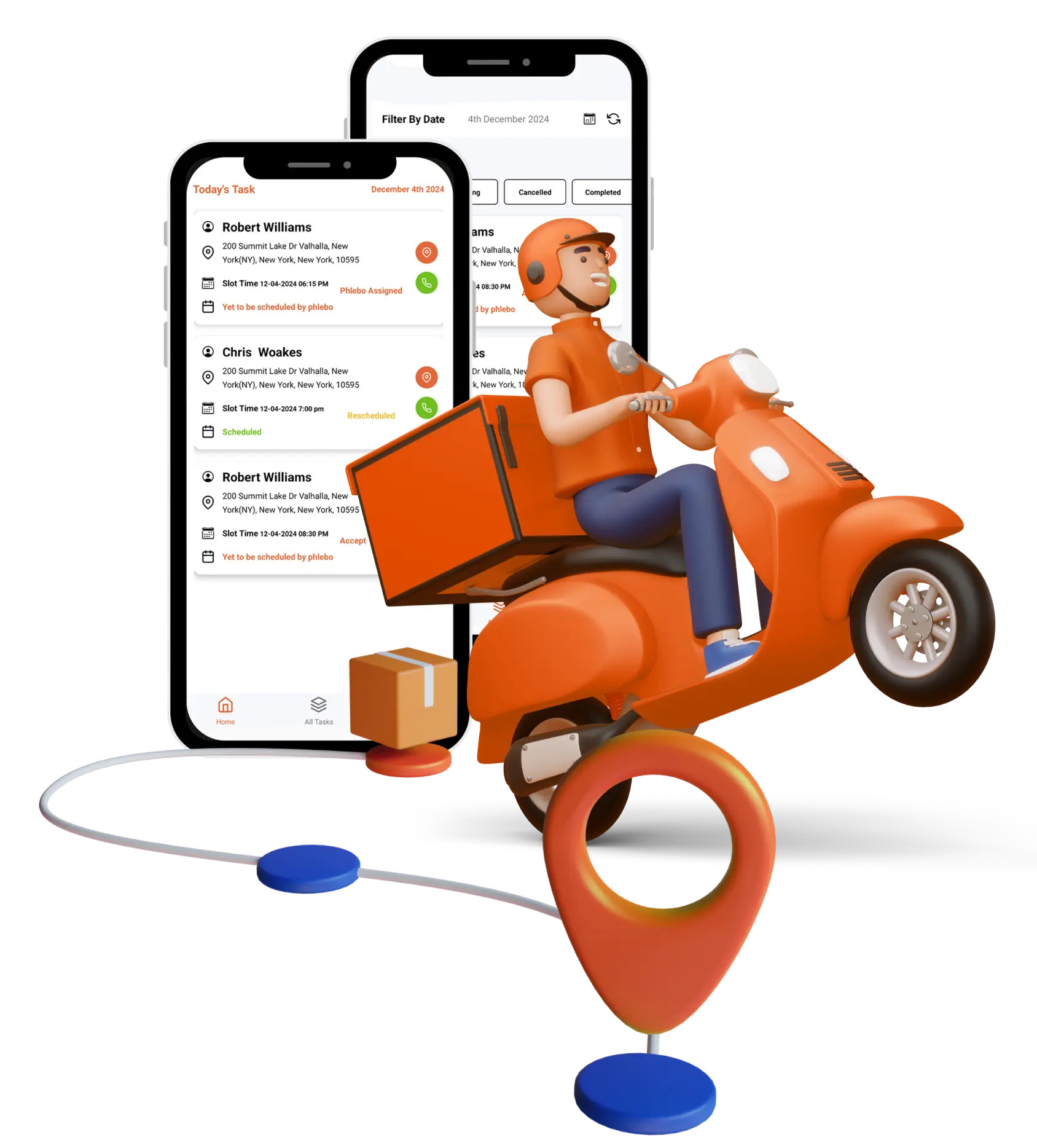
Pathoconnect is a comprehensive diagnostic operations management platform designed for pathology labs, diagnostic centers, and healthcare networks. It centralizes order management, phlebotomist coordination, reporting, finance, and third-party integrations into a single, scalable system.
To support rapid growth and operational complexity, Pathoconnect introduced AI agents to act as intelligent operational assistants rather than standalone chatbots.
Operational Challenges Before AI Agent Adoption
Before introducing AI agents, Pathoconnect teams faced several recurring challenges:
- Manual tracking of order status across dashboards
- Delays in phlebotomist assignment and rescheduling
- Reactive handling of order delays and SLA breaches
- High volume of repetitive patient and partner queries
- Manual report follow-ups and insurance communication
- Limited real-time visibility into revenue and pending payments
These challenges increased dependency on human intervention and restricted scalability.
Introducing AI-Powered Agents in Pathoconnect
Pathoconnect deployed AI-powered agents with a chatbot interface integrated directly into the admin and operations dashboard. These agents are capable of:
- Understanding natural-language prompts
- Fetching real-time data from the PathoConnect system
- Taking rule-based operational decisions
- Triggering automated actions such as notifications, assignments, and emails
Unlike traditional chatbots, Pathoconnect’s AI agents operate as context-aware decision engines within the diagnostic workflow.
How AI Agents Work Inside Pathoconnect
AI agents respond to user prompts like:
- “Show today’s pending orders”
- “Why is this order not allotted?”
The AI agent understands the operational context — order status, location, phlebotomist availability, timelines, and SLA rules.
Based on predefined logic and real-time data, the AI agent decides the next action — assign, notify, escalate, or reschedule
Key AI Agent–Driven Use Cases in Pathoconnect
The AI agent retrieves complete order details using Order ID and instantly provides:
- Order status
- Reason for delay or non-allocation
- Execution progress
Impact: Faster issue resolution and reduced manual monitoring.
The AI agent analyzes location, availability, workload, urgency, and performance metrics to assign the right phlebotomist. If no resource is available, it escalates the issue to the admin team.
Impact: Optimized workforce utilization and faster order execution.
Instead of reacting to SLA breaches, AI agents monitor pickup schedules and execution timelines to predict potential delays and trigger early alerts.
Impact: Improved SLA compliance and reduced customer dissatisfaction.
Through its chatbot interface, the AI agent handles common patient queries related to:
- Sample collection
- Order status
- Report timelines
Only complex cases are escalated to human support teams.
Impact: Reduced support load and better patient experience.
The AI agent monitors report readiness, notifies stakeholders, and securely shares report links. It also responds to chatbot queries regarding report availability.
Impact: Faster report delivery and fewer follow-ups.
For insurance-linked orders, the AI agent automatically sends emails to insurance providers and third-party administrators with relevant order details and reports.
Impact: Faster insurance processing and reduced administrative effort.
Dedicated and professional development team right at your disposal.
Before vs After: Operational Transformation
Industry | MCP-Powered Use Cases |
Retail / E-commerce | Real-time order status, returns, stock levels |
Manufacturing | Production schedules, supply chain analytics |
Finance / Banking | Live transaction monitoring, forecasts |
Healthcare | Patient data access, billing, lab results |
Human Resources | Attendance, leaves, and performance tracking |
From automation to analytics, MCP adapts to any business domain with data-driven precision.
Business Outcomes Achieved
- 40–60% reduction in manual operational effort
- Faster order execution and report delivery
- Improved SLA adherence
- Enhanced patient, lab, and partner satisfaction
- Scalable operations without proportional manpower growth

Why AI Agents Are Central to the Future of Diagnostic Platforms
Pathoconnect’s AI agents do not replace human teams — they empower them. By automating repetitive tasks and enabling faster decision-making, Pathoconnect has evolved into an intelligent diagnostic operations platform.
This AI-first approach ensures that Pathoconnect remains scalable, responsive, and future-ready.
Conclusion
The Pathoconnect AI agent implementation demonstrates how practical, workflow-driven AI can transform diagnostic operations. By embedding intelligence directly into everyday processes, PathoConnect has set a new benchmark for operational excellence in diagnostic technology.
Pathoconnect is not just managing diagnostics — it is redefining how diagnostic operations scale with AI.